You’ve been accumulating knowledge every time you’ve travelled. Here’s how to package that knowledge into two of the most powerful income streams available to a travel creator – and why both are simpler to start than you think.
This is Post 6 in the Turn Your Passion Into a Business series. Earlier posts cover launching a travel guide business, brand identity, content strategy, SEO, and affiliate partnerships. Or read on – this one stands on its own.
Disclosure: This post contains affiliate links. If you buy/upgrade through them I earn a small commission at no extra cost to you.
Itineraries and Digital Products Are Not What Most People Think
Ask someone what a travel itinerary is and they’ll say it’s a schedule – a day-by-day plan for a trip. Ask someone what a digital product is and they’ll picture an app, a software download, something a developer builds. Both answers miss what these things actually are for a travel content creator – and both misconceptions are worth clearing up before we go any further.
A travel itinerary, in the context of a content business, is not just a schedule. It is packaged expertise. It is the distillation of research, experience, and local knowledge into something a reader can pick up and use immediately – saving them hours of planning, dozens of browser tabs, and the anxiety of not knowing if they’ve missed something important. That is genuinely valuable. And valuable things can be monetised.
A digital product is not software. For a travel creator it is simply knowledge in a downloadable format – a PDF guide, a planning template, a packing checklist, a photography location map. Something you create once and sell repeatedly, with no inventory, no shipping, and no upper limit on how many times it can earn.
Together, itineraries and digital products form two of the most natural and powerful income layers available to a travel site – one that earns through affiliate commissions, and one that earns through direct sales. Let’s clear the most common misconceptions first.
[ Table is Swipable ]
What People Think | What’s Actually True |
|---|---|
Every trip you’ve taken has left you knowing something your reader desperately wants to know. The itinerary and the digital product are simply the formats that let you share that knowledge — and get paid for it.
The Itinerary as a Business Asset
Of all the content formats available to a travel creator, the itinerary is arguably the most powerful from a business perspective. Not because it’s the most read — destination guides and how-to posts typically attract more traffic. But because itineraries catch readers at the highest-intent moment in the travel planning cycle: when they’ve decided where they’re going and are now figuring out exactly what to do.
That intent translates directly into action. A reader following an itinerary is making decisions –where to stay, what tours to book, what gear to pack, which travel insurance to get. Every one of those decisions is an affiliate opportunity. And because the itinerary has already earned their trust by solving their planning problem, those recommendations convert at a significantly higher rate than a general destination guide.
Here’s what the anatomy of a well-constructed travel itinerary looks like from a business perspective:
[ Table is Swipable ]
Itinerary Anatomy
What Each Element Does for Your Reader – and Your Business
Day-by-day structure | “I know exactly what I’m doing and when – the planning anxiety is gone” | Keeps readers on page longer – signals authority to search engines |
|---|---|---|
Accommodation picks | “Someone I trust has already vetted these – I don’t have to scroll through hundreds of reviews” | Booking.com / Hotels.com affiliate links – high commission value per booking |
Tour recommendations | “These are the experiences worth paying for – I won’t waste money on the wrong things” | GetYourGuide / Viator affiliate links – 6–8% per booking |
Practical logistics | “I know how to get around, what things cost, what to watch out for” | Transport affiliates, travel insurance recommendations, gear links |
Personal tips and local knowledge | “This person has actually been here – these aren’t just recycled from other blogs” | Builds the trust that brings readers back and makes paid products sell |
The SEO Advantage of Itineraries
Itineraries rank well in search because they answer a highly specific, high-intent query – “two weeks in X” or “10 days in Y” – that major travel publishers rarely cover with the depth and personal authority an independent creator can bring. Long-tail itinerary posts are some of the most achievable first-page rankings available to a newer travel site.
From Free Itinerary to Paid Digital Product
Here is a progression that happens naturally on travel sites that are growing with intention – and that you can plan for deliberately rather than stumble into by accident.
This progression works because each stage builds on the trust established by the previous one. The free post proves you know what you’re talking about. The downloadable upgrade delivers additional value and either builds your email list or generates a small sale. The premium product is the natural destination for the reader who loved the free content and wants everything you know about that destination or travel style.
Not every itinerary needs to follow this path. But having it in mind as you create your free content means you’re building something with multiple income layers from the start – not retrofitting a monetisation strategy onto content that wasn’t designed for it.
What Travel Digital Products Actually Look Like
The range of digital products a travel creator can build is wider than most people expect – and most of them require nothing more than a word processor, a design tool, and knowledge you already have. Here’s the full spectrum, from simplest to most ambitious:
Notice that none of these require coding, design expertise, or specialist software. A destination guide PDF can be created in Canva in an afternoon. A trip planning template can be built in Google Sheets in a morning. A packing guide can be written in any word processor and exported as a PDF. The barrier to creating a digital product is almost entirely psychological – not technical.
How to Create and Sell Your First One
The question most people get stuck on isn’t what to create — it’s how to actually get it made, priced, and in front of people who’ll buy it. Here’s the process stripped back to its practical essentials:
1 | Choose the Right First ProductStart with something you already know deeply and that your existing content suggests your audience wants. Look at your most-visited posts – the destination or topic that consistently draws readers is almost certainly the right subject for your first product. |
|---|---|
2 | Create It SimplyUse Canva for design-led products like guides and cheat sheets. Use Google Docs or Notion for text-heavy products. Use Google Sheets for templates and planners. Export as PDF. Keep the first version lean – you can expand it based on feedback. |
3 | Price It HonestlyPrice based on the value you’re delivering, not the time it took you to create. A guide that saves someone eight hours of research and gives them a significantly better trip is worth more than the hour it took you to write. Start lower than you think, then raise prices as reviews and demand build. |
4 | Choose a Simple Sales PlatformGumroad and Payhip are the simplest starting points – both handle payments, delivery, and basic analytics with no technical setup required. As your product range grows, integrating a shop directly into your website gives you more control and a better reader experience. |
5 | Connect It to Your ContentEvery relevant post on your site should mention and link to your digital product. Your itinerary post links to the downloadable PDF version. Your packing guide post links to the premium packing template. Your content is the discovery mechanism – your product is the natural next step for readers who want more. |
6 | Build the Infrastructure That Makes It DiscoverableThis is where the work from earlier in this series pays off most directly. The SEO from Post 4 brings readers to your content. The content strategy from Post 3 puts them in front of your product at the right moment. The brand identity from Post 2 makes them trust it enough to buy. Wealthy Affiliate teaches you how to build and connect all of these layers into a system that works together – so your digital products have the best possible chance of being found by exactly the right people. |

You’ve Already Done the Hardest Part
Creating a digital product feels daunting until you realise that the hardest part – acquiring the knowledge – is already done. Every trip you’ve taken, every destination you’ve researched, every question you’ve answered for a friend planning a holiday – that’s your product library, waiting to be packaged.
The itinerary you’d give a close friend planning their first trip to your favourite destination? That’s a product. The packing list you’ve refined over a dozen trips to a specific type of climate? That’s a product. The photography spots you know that don’t show up in any guidebook? That’s a product.
You don’t need to know everything. You need to know something specific, know it well, and package it in a way that saves your reader time and improves their experience. That is a standard every person who has travelled thoughtfully and paid attention already meets.
The itinerary post you publish next week could become the downloadable guide you sell next month. And that guide, connected to the content infrastructure you’re building, could still be earning three years from now – from a trip you took long before you started this business.
The knowledge is already there. Now it just needs a format.
Build the Infrastructure That Makes Your Products Discoverable
Wealthy Affiliate teaches you how to connect great content, SEO, and digital products into a travel business that earns — from day one.
Free to join. No credit card required. Cancel anytime.
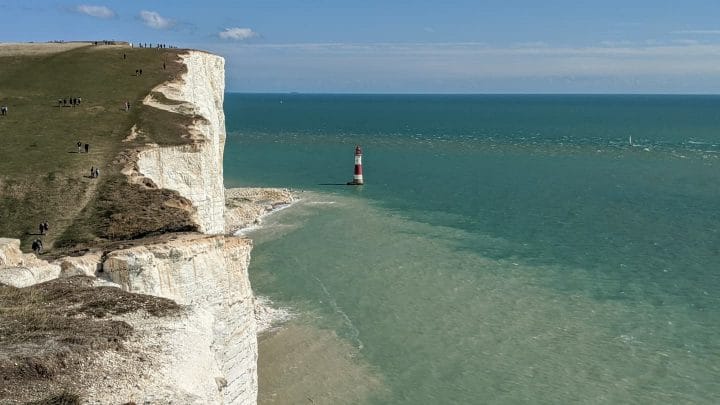
Featured image by Ollie Relfe © 2026 All rights reserved — A striking personal photograph taken from the clifftop path at Beachy Head in East Sussex on a bright day, looking down and across the sheer white chalk cliff face to the vivid turquoise English Channel below. The distinctive red and white striped Beachy Head lighthouse stands at the base of the cliffs in the sea. Groups of walkers are visible along the clifftop path to the left under a clear blue sky with a distant sailing boat on the horizon.
Turn Your Passion Into a Business — The Series
- Launch a Travel Guide Business
- Building Your Travel Brand Identity
- Content Strategy for Travel Sites
- SEO for Travel: Getting Found Online
- Affiliate Partnerships & Monetisation
- Itineraries & Digital Products
- Tour & Experience Collaborations
- Marketing Your Travel Brand
- Licences, Insurance & Going Official
- Scaling: From Blog to Business
- Travel Business FAQ